We start with masonry.
We will build the whole site.
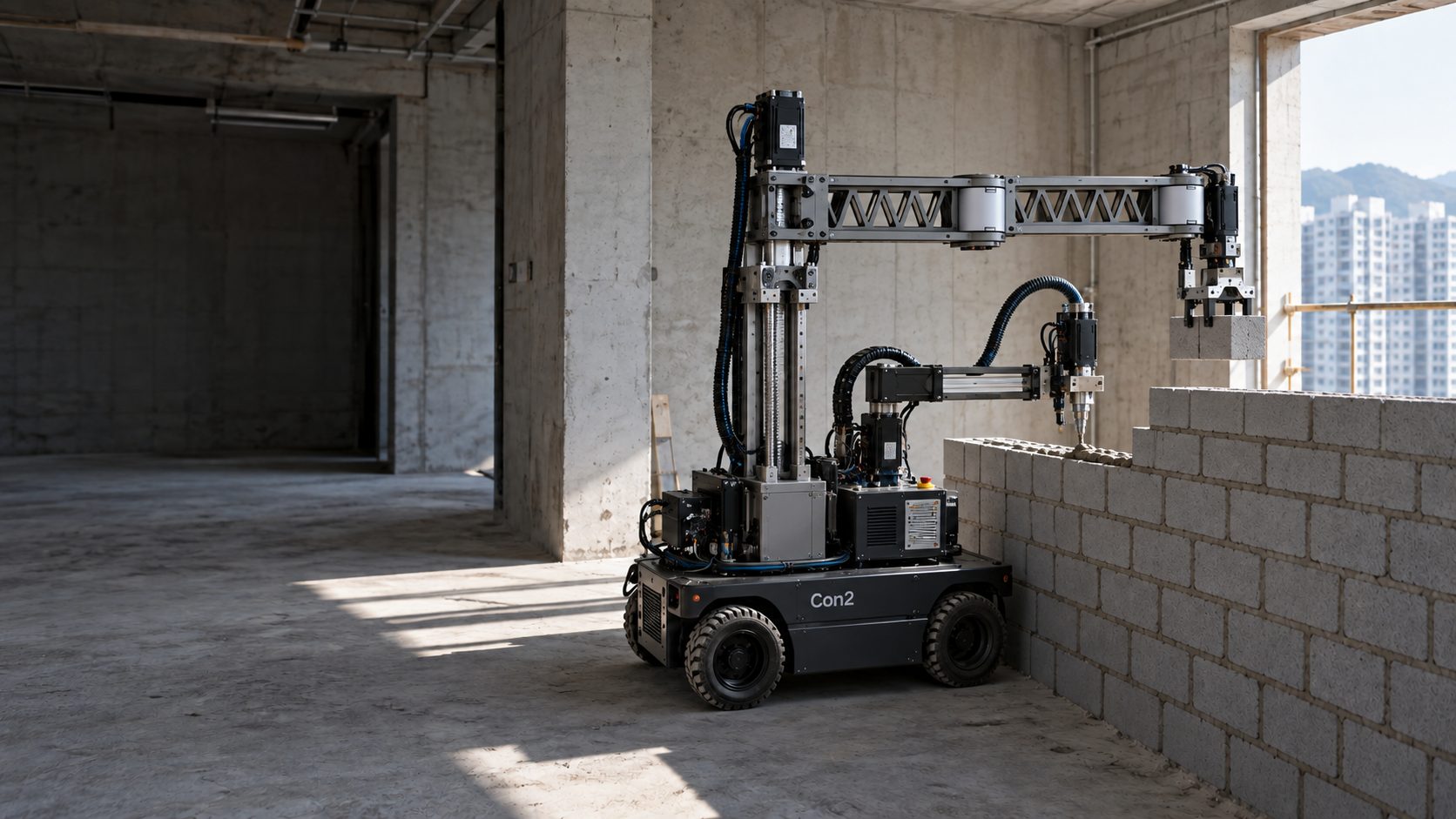
MANTA Robotics builds a mobile robot that lays interior masonry walls in apartment construction. It reads the chalk lines on the slab to place each block within 2 mm, and it moves with policies learned from skilled workers.
The trade that stops when nobody shows up
Masonry is among the fastest-aging and fastest-rising-wage trades in Korean construction. Bricklaying robots exist, but most are truck-mounted machines for exterior walls. No robot yet passes through an apartment door to build bathroom and balcony walls. That gap is where we start.
- 29.4%
- of skilled construction workers are 60 or olderConstruction Workers Mutual Aid Association, May 2026
- KRW 270k
- daily wage of a masonConstruction wage survey, H1 2026
- KRW 600B
- annual in-unit masonry spend in new apartments240k to 270k units started per year × KRW 2.3M per unit. Our estimate.
The chalk line is our map
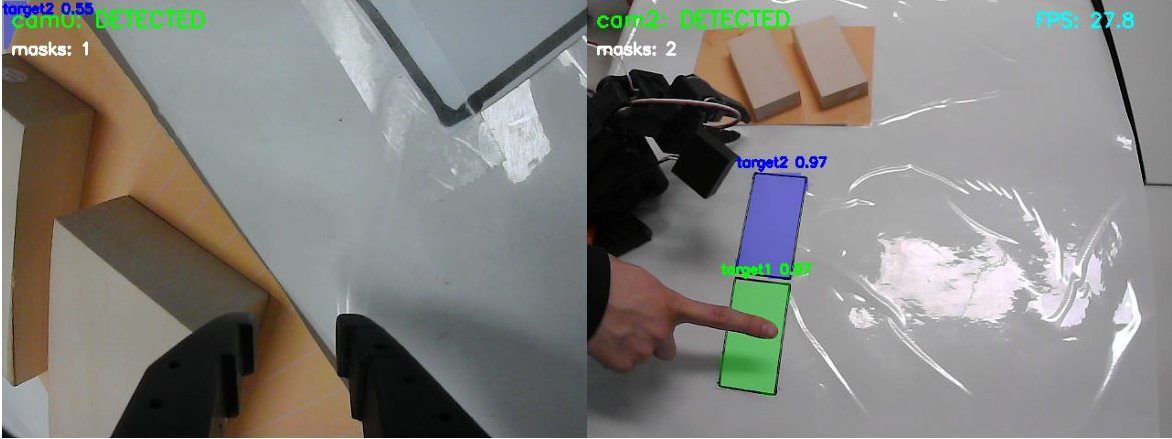
Every site already has coordinates drawn on it. They are the chalk lines snapped on floors and walls during layout. Inside a bare concrete unit, general-purpose SLAM finds few features to hold on to, so position error builds up.
MANTA detects chalk lines with its cameras and solves its position and heading directly against the construction reference lines. Drift is reset every time the robot sees a line again. Right before placing a block, it corrects once more against the line.
Learn from people, scale in simulation, correct on site
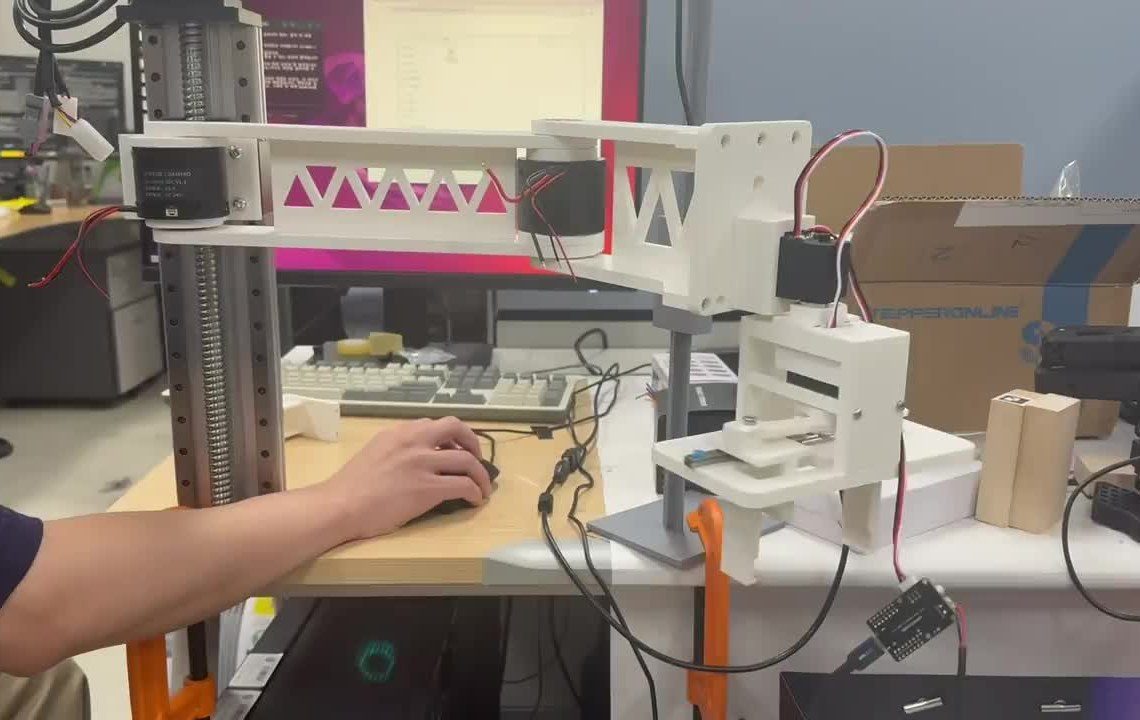
Conventional industrial robots are programmed point by point and must be retaught whenever the task changes. Our robot learns by watching skilled workers. A new task needs 50 to 100 demonstrations for an initial policy, and the same robot takes on another process by changing its tool.
First-person demonstrations
Skilled workers record their hands, gaze and work with a head-mounted camera.
Teleoperation
Operators drive the robot with a leader arm to collect demonstrations from the robot's point of view.
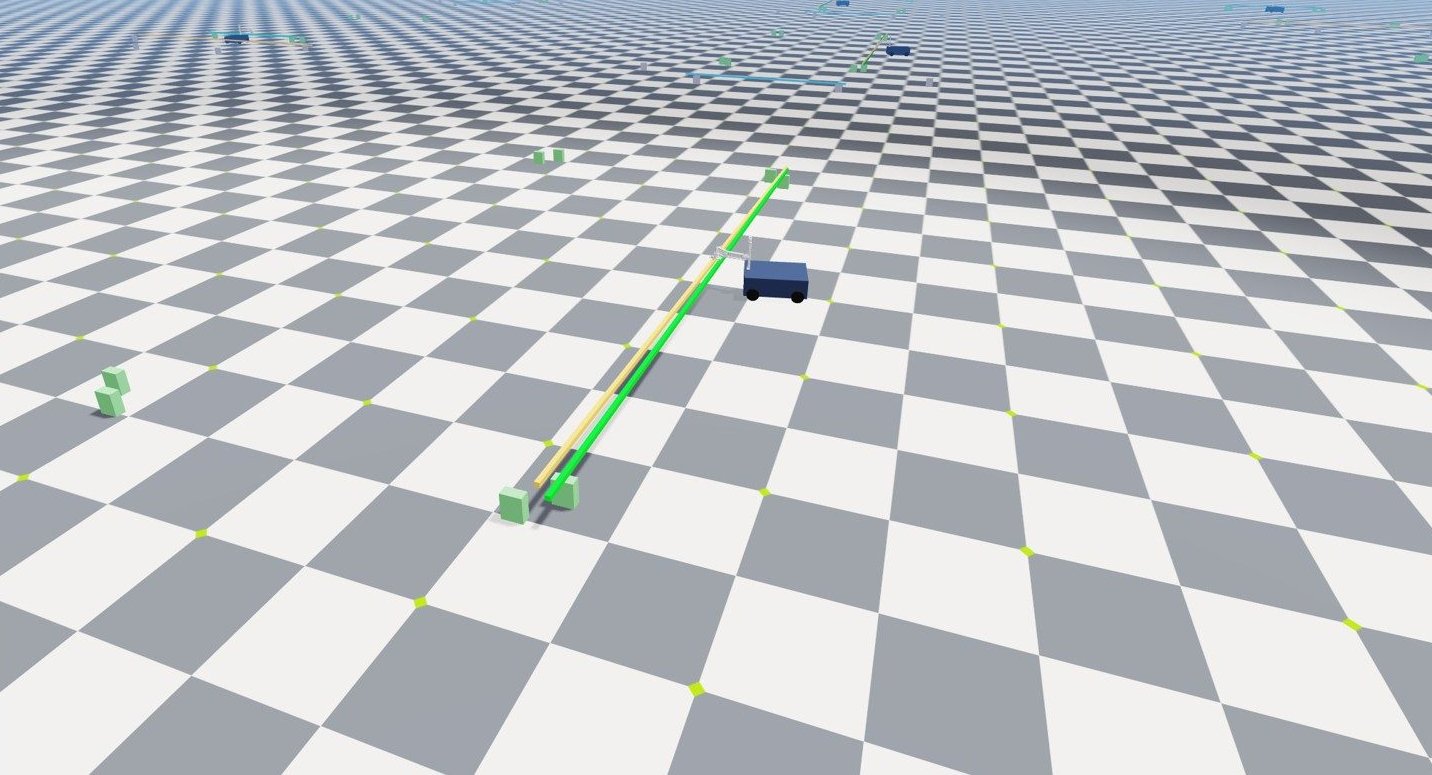
Reinforcement learning in simulation
Policies trained at scale in a digital twin are transferred to the real robot.
Chalk-line correction
Just before placement, the robot re-aligns to the chalk line to land within 2 mm.
Coordinated mortar work
A dispensing arm applies mortar and a placing arm sets the block, in one cycle.
We design and build our own arm
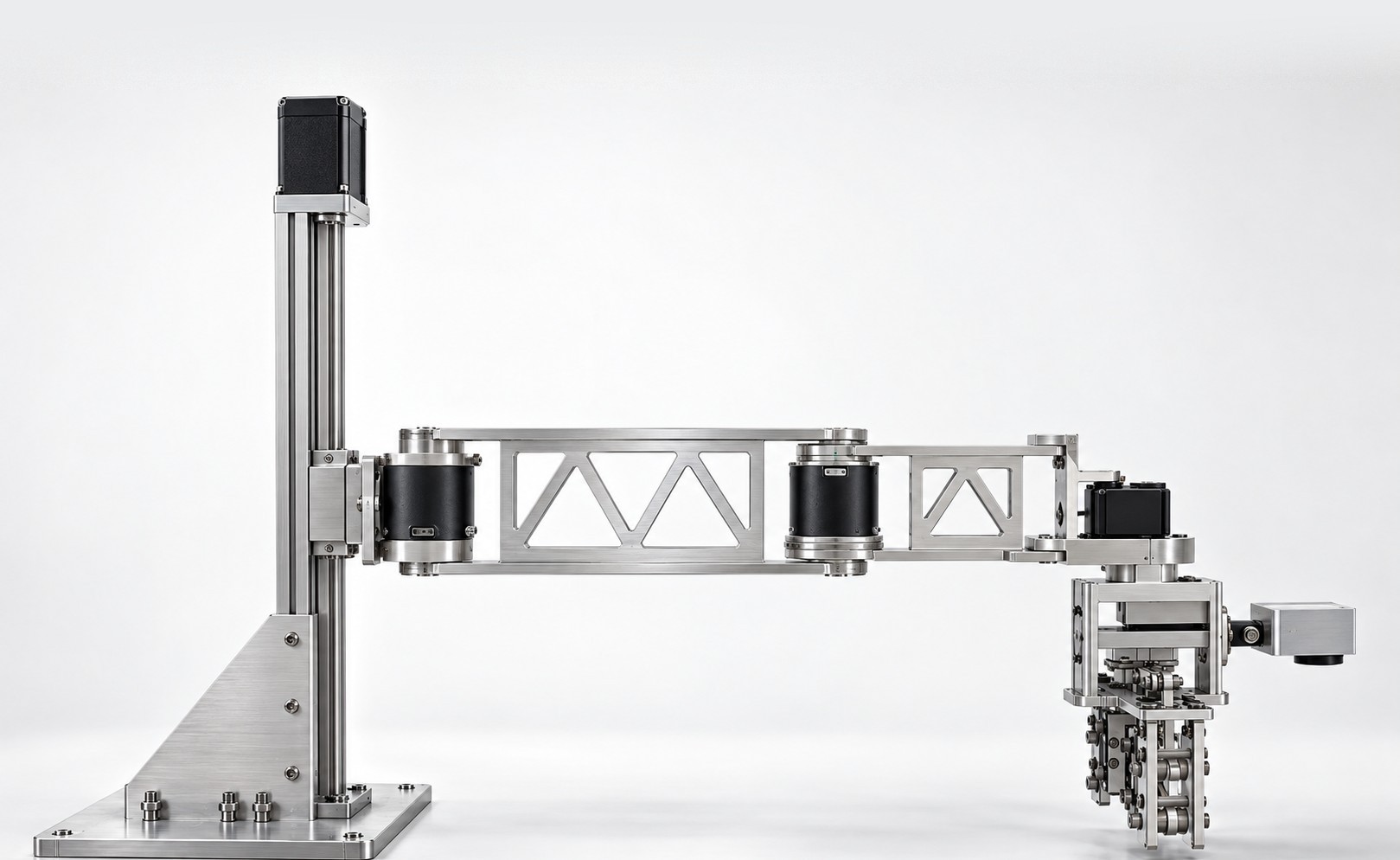
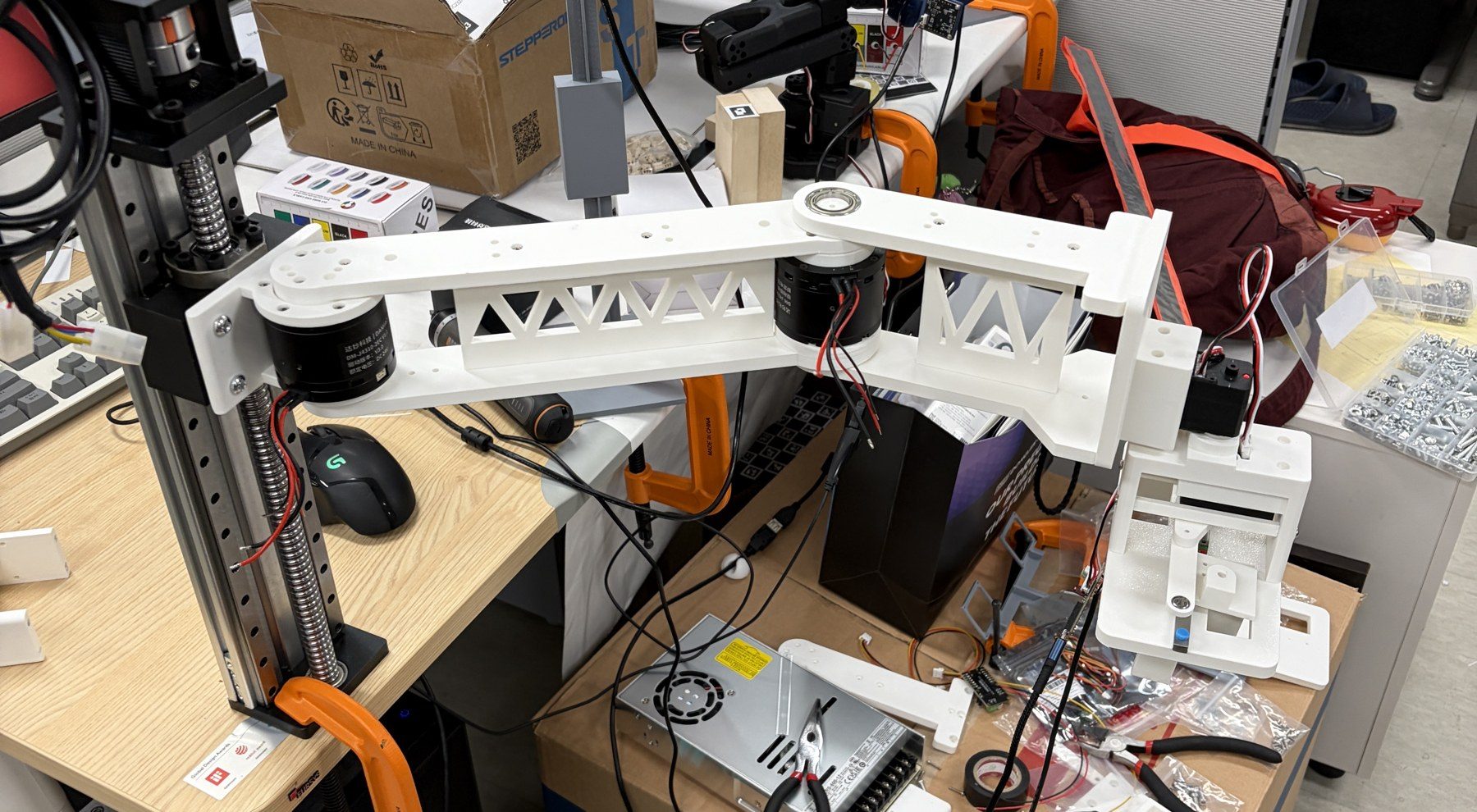
Commercial cobots have closed controllers that make learned policies hard to deploy, and the arm alone costs over KRW 40M. So we designed our own. A 3D-printed version validated actuation and imitation learning, and we are now moving to an aluminum structure. One arm costs about KRW 3M to build.
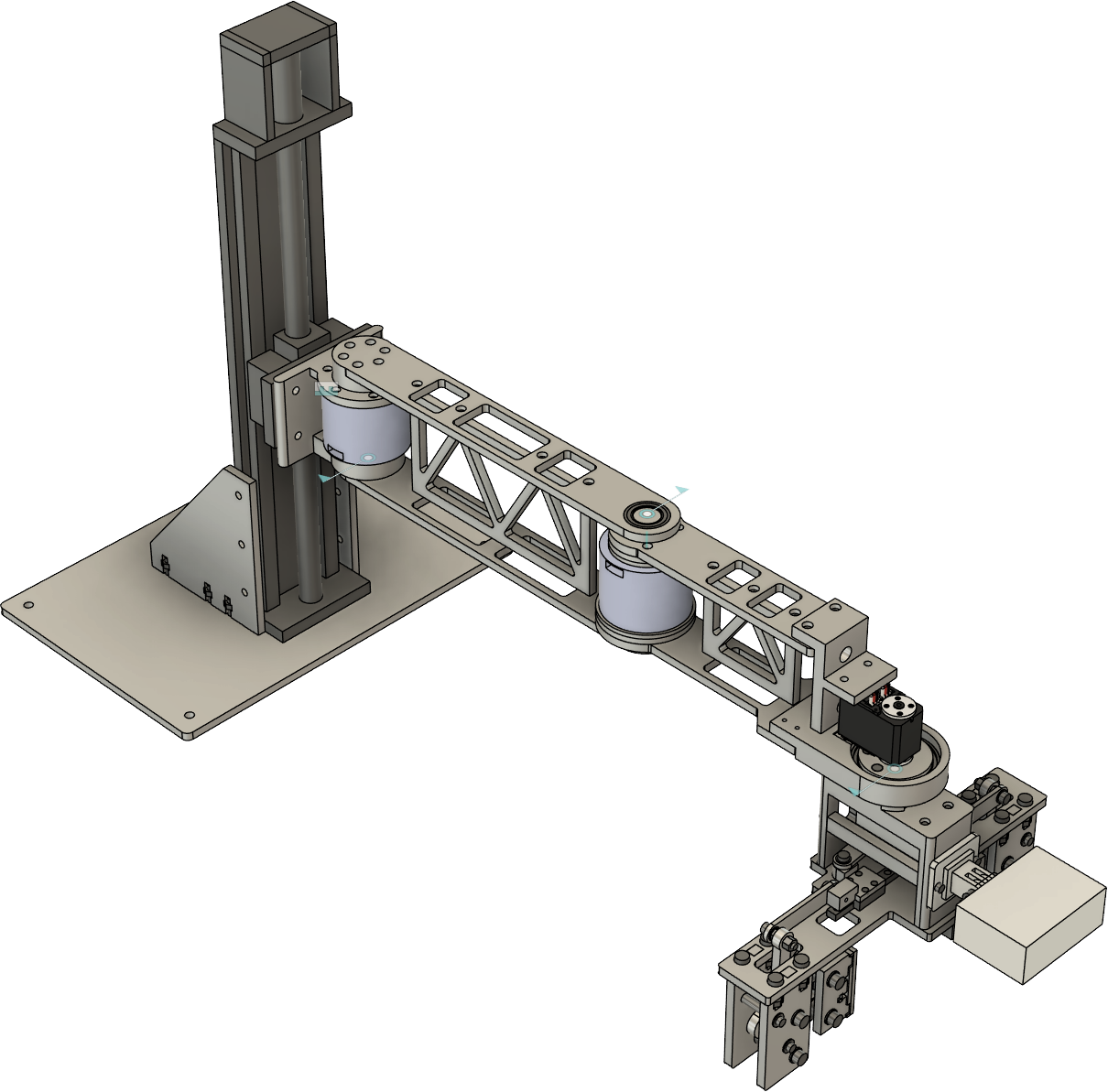
| Layout | Vertical Z axis, two horizontal joints, wrist rotation |
|---|---|
| Z axis | Linear rail, 444 mm |
| J1, J2 | DM4310 joint modules |
| Wrist | STS3215 servo |
| Gripper | SE90 self-locking, 90 mm |
| Wrist camera | GoPro HERO11 |
| Links | Aluminum plate truss |
| Reach | Approx. 430 mm |
| Build cost | Approx. KRW 3M per arm |
Where we are
Core technologies are validated in the lab, at TRL 3. Next we aim to reach TRL 6 through an on-site proof of concept.
Done
- Teleoperation demonstration data collected
- Imitation-learning policy trained and run on hardware
- Robot arm designed and 3D-printed prototype built
- 15 kg member placed in about 1 minute in simulation, 1.5 to 2 times human speed
- One patent granted, one pending, international journal papers
In progress
- Moving to an aluminum structure
- Mortar pump and dispensing arm
- Digital twin
- Measuring masonry cycle time and accuracy
Next
- Site-ready prototype robot
- 12-month PoC on an apartment site
| Block position error | Within 2 mm |
|---|---|
| Mortar volume | ±5% |
| First-try placement | 90% or more |
Same pipeline, new tools
Chalk-line and wall perception, learning from demonstration and learning in simulation carry over from trade to trade. What changes is the tool at the end of the arm and the training data. We take what we prove in masonry to interior finishing, then to module factories and the whole site.
Construction spend our robots address KRW 1.0T per year, 6.6% of building cost
-
Masonry
6.6% of building cost, about KRW 1.0T a year
We start with non-load-bearing walls inside apartment units: bathrooms, balconies, shafts and partitions. It is the hardest trade to staff and the one with the clearest chalk-line reference.
-
Interior finishing
28.1% cumulative, about KRW 4.3T a year
Next come plastering, tiling, painting, waterproofing and fit-out. Each is repetitive work referenced to chalk lines and walls. The perception and learning stay the same. Only the tool and the demonstrations change.
-
Module factories and installation
39.5% cumulative, about KRW 6.1T a year
With a welding torch and a vacuum panel gripper, the same arm assembles frames and installs wall panels in off-site module factories. We then bring those assembly and installation skills back to metal work, windows and doors on site.
-
The whole site
About KRW 15T a year in apartment building cost
The goal is all of building construction, structure and earthwork included. The demonstrations and work data from every site become the starting point for the next trade.
Shares cover the 19 trades of Korean apartment building work, shown as the top 10 trades plus the other 9 combined. Amounts are our estimate: about 250,000 units started per year times about KRW 61.5M of building cost per unit. The per-unit cost is the SH Godeok-Gangil Block 4 masonry cost of KRW 4.06M per unit divided by the 6.6% masonry share.
A team that knows both the site and the model
Two of us managed construction at major Korean contractors. One of us comes from an AI startup. All three of us research construction AI at Yonsei University.
-
Kichang Choi CEO
Leads the company, robot design, learning models
Ph.D. candidate in Civil and Environmental Engineering, Yonsei University. 3.5 years in construction management at Ssangyong E&C. First author in Automation in Construction and Advanced Engineering Informatics. Runs a nationwide water-level forecasting service unattended, 24 hours a day.
-
Hyunwook Park Co-founder
Action models, simulation learning, finance
Integrated M.S./Ph.D. student, Yonsei University. 1 year 8 months in building construction at DL E&C. CFA Level I, licensed Architectural Engineer.
-
Dayeon Kang Co-founder
Demonstration data, business development
M.S. student, Yonsei University. Previously at an AI startup. Excellence Award, LH National Land Development Technology Competition.
Research home. Smart Infrastructure Lab, led by Prof. Hongjo Kim, Department of Civil and Environmental Engineering, Yonsei University. 42 international journal papers and 20 patents granted or pending, across computer vision, 3D, physics-informed AI and engineering agents.
Let's talk
We will send our investor deck and prototype videos by email. We are also looking for contractors and module manufacturers to run a site PoC with us.
Engineering Hall 1, Yonsei University, 50 Yonsei-ro, Seodaemun-gu, Seoul, Korea